
When You May Need Ductwork & Airflow Services
Start here when your HVAC need matches Ductwork & Airflow Services. Common reasons to request this service can include Weak airflow, Uneven rooms, Visible duct damage. You do not need to identify the failed part before asking for help. If the system has stopped working, is repeatedly shutting down, or comfort has changed suddenly, an active repair path usually makes more sense than routine maintenance. If the system is still operating and you are planning seasonal care, maintenance or inspection may be the better fit.
What to Notice Before You Call
Helpful details include when the issue started, whether it is constant or intermittent, which thermostat mode is selected, whether the indoor blower and outdoor equipment are running, which rooms are affected, and whether you see water, ice, an error code, a tripped breaker, or a new sound or odor. These simple observations can make the first conversation more useful. Do not open energized panels, handle refrigerant components, bypass furnace safeties, or keep resetting electrical protection that will not stay on.
What a Technician May Check
The same symptom can come from more than one part of the HVAC system. For Ductwork & Airflow Services, the evaluation may involve Supply and return paths, Accessible duct condition, Airflow balance, Interaction with blower and equipment. Testing should follow the system's operating sequence and the symptoms you reported instead of assuming a familiar part is the cause. A useful diagnosis should explain what was tested, what failed, what remains functional, and why the proposed work addresses the problem.
What Can Change the Scope of Work
Equipment type, age, previous repairs, accessibility, control compatibility, airflow, electrical conditions, drainage, refrigerant-side work where applicable, and whether more than one fault is present can all change the final scope. Installation and replacement projects may also involve duct, thermostat, electrical, condensate, or site changes. That is why the next step should follow the actual condition of the system rather than one generic price or one assumed repair.
Repair, Maintenance, Installation or Replacement?
The right category depends on what you need today. Repair is for an active fault. Maintenance is planned service for equipment that is still operating. Installation covers a new project or system change. Replacement becomes relevant when the condition, repair history, or fit of the existing equipment makes a new system worth evaluating. If you are unsure which category applies, describe what the system is doing and start with the closest match.
Before the Appointment
Keep the area around accessible HVAC equipment reasonably clear and write down the symptoms you have noticed. If the issue comes and goes, note the time of day, thermostat mode, outdoor conditions, and anything that seems to trigger it. If another provider recently worked on the system, have that information available if practical. Do not remove access panels or force equipment to run when a breaker, safety control, burning smell, water problem, or another condition suggests it should remain off.
Woods Cross 84087 Service Notes
For homes and businesses in Woods Cross, Utah 84087, the most useful starting point is the problem you are seeing now: no cooling, no heat, weak airflow, thermostat trouble, unusual cycling, water, ice, noise, or a planned HVAC project. Heating, cooling, controls, airflow, and commercial equipment can require different service paths, so the provider should match the visit to the equipment and symptoms you describe.
Questions Worth Asking Before You Authorize Work
Ask what was tested, what was found, which work is necessary to restore or improve operation, what is optional, and how pricing will be presented before work begins. For installation or replacement, ask how sizing, airflow, controls, and equipment compatibility were considered. For repair, ask what evidence supports the diagnosis and whether another fault could create the same symptom. Clear scope and understandable reasoning make it easier to decide what to do next.
After the Work Is Completed
Confirm what was done and whether the original complaint changed. For repair, ask whether the system now completes a normal operating cycle and whether follow-up work is recommended. For maintenance, ask which findings were routine and which indicate a developing repair need. For installation or replacement, confirm that startup, thermostat operation, and airflow were checked and that operating instructions and warranty information are clear.
Ductwork in Woods Cross: Where Older Homes Lose Their Air
Duct problems are the quiet cause behind many Woods Cross comfort complaints. In the city's established neighborhoods, duct systems were often installed for the furnace of a different era: trunk lines sized for lower airflow, flex runs added during remodels, and joints sealed with tape that failed years ago. Studies of typical homes routinely find a fifth or more of conditioned air lost to leakage, and in Woods Cross much of that leakage goes into hot attics in summer and cold attics in winter — the worst possible trade. Symptoms are recognizable: the bedroom over the garage that never matches the thermostat, dust that returns days after cleaning (a sign returns are pulling attic air), and rooms that whistle or doors that swing when the blower starts. Newer west-side homes have different duct issues — long flex runs to distant registers and zoning dampers that drift out of adjustment. Duct sealing, return-air additions, insulation repair and airflow balancing are unglamorous work, but on many local homes they improve comfort more than new equipment would, because new equipment connected to leaky ducts inherits the same losses.
Woods Cross HVAC Duct Repair & Static Pressure Optimization
Leaky, crushed, or disconnected duct runs in unconditioned attics or crawl spaces cause up to 30% heated or cooled air loss before reaching living areas. For targeted duct problems, our dedicated <a class="inline-seo-link" href="/damaged-ductwork-woods-cross/">Damaged Ductwork Woods Cross</a> guide and <a class="inline-seo-link" href="/duct-leak-woods-cross/">Duct Leak Repair</a> pinpoint split seams, disconnected collar boots, and crushed flexible ducts. Using digital manometer static pressure testing, technicians verify that supply and return trunks deliver balanced CFM airflow across every room in your home.
Typical service scope
Ductwork & Airflow Services FAQs
Do I need to know exactly what failed before I call?+
No. Describe the symptom, equipment type if known, thermostat mode, timing, and anything unusual you can safely observe. Diagnosis should confirm the cause.
Is this service relevant for Woods Cross, Utah 84087?+
Yes. The local information on this page is focused on HVAC needs in Woods Cross, Utah 84087 in Davis County.
Can I call for urgent HVAC help?+
The displayed HVAC line is configured for 24/7 help. Fire, smoke, suspected gas leaks, or carbon-monoxide alarms require the appropriate emergency or utility response instead of routine HVAC service.
How should I compare HVAC providers?+
Compare the diagnosis, scope, pricing explanation, credentials appropriate to the work, warranty terms, and communication rather than relying on marketing superlatives.
How do I know if my Woods Cross home has duct leakage?+
Common signs are rooms that never reach the thermostat temperature, heavy dust, high bills relative to similar homes, and visible disconnected or crushed runs in the attic. A technician can confirm with static-pressure and airflow checks rather than guessing.
Common Ductwork & Airflow Services problems and decisions
These focused guides explain related symptoms, safe observations and when this service may be the right next step.
- Weak Airflow From AC Vents in Woods Cross, UT
- Weak HVAC Airflow in Woods Cross, UT
- Uneven Temperatures Between Rooms in Woods Cross, UT
- HVAC Duct Leak in Woods Cross, UT
- Noisy Ductwork in Woods Cross, UT
- Damaged HVAC Ductwork in Woods Cross, UT
- Ductwork Installation Guide in Woods Cross, UT
- Return Air Problems in Woods Cross, UT
- Supply Vent Airflow Problems in Woods Cross, UT
- HVAC Air Balancing in Woods Cross, UT
- HVAC Zoning and Airflow in Woods Cross, UT
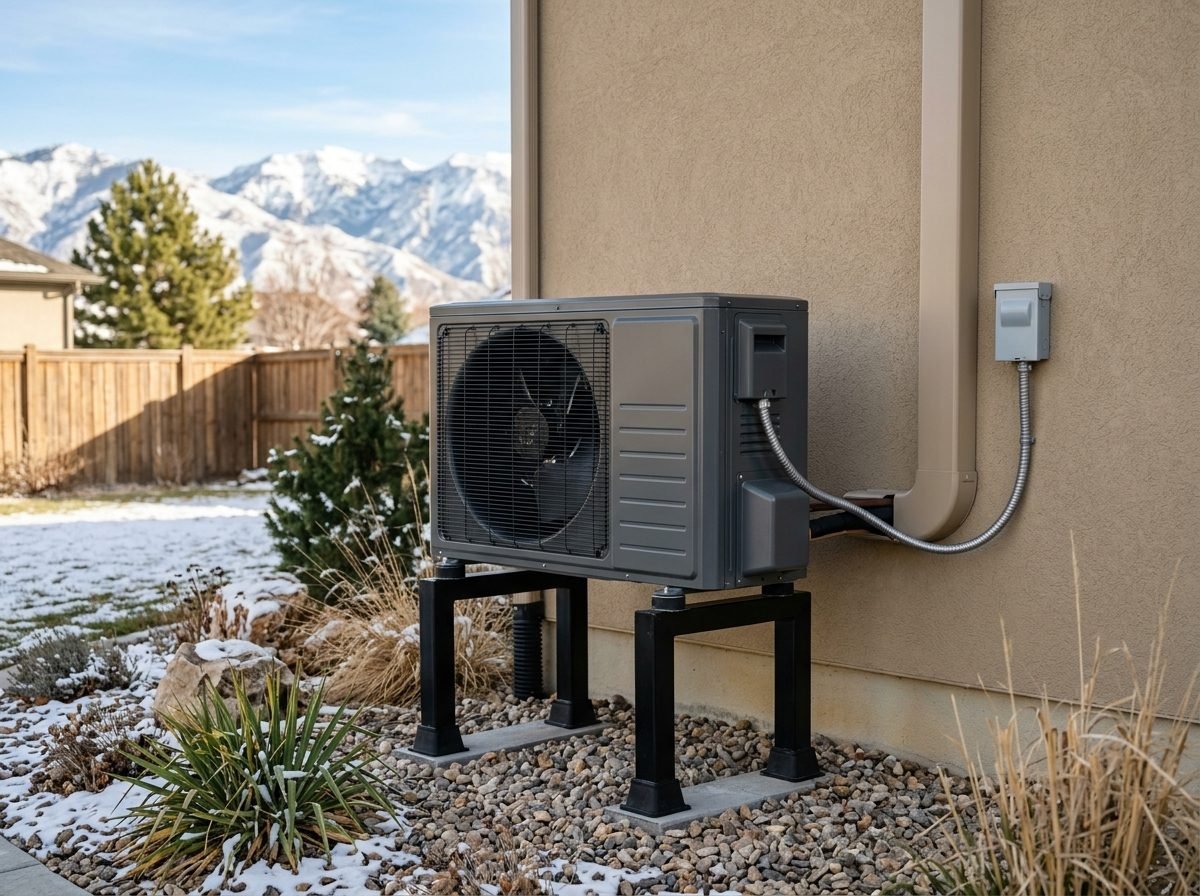
Cold-Climate Inverter Heat Pump Retrofit on Elevated Snow Stands
Diagnostic Finding: Outdoor unit was set directly on grade against northern foundation wall with no snow stands, causing drifting snowpack to choke outdoor coil and trigger continuous defrost faults.
Work Performed: Installed a 4-ton variable-capacity cold-climate inverter heat pump elevated 18 inches on steel snow stands with crankcase base pan heaters, maintaining heating capacity down to -13°F and securing Wattsmart rebates.
Explore all Woods Cross case studies →